

For the last few weeks I have been helping Catcher Media digitise and edit interviews from past projects ‘Chewing the Cud’ and ‘Cathedral Close’ to be delivered as individual heritage interviews beyond their initial clipped use in their respective projects.
One of the most fascinating parts of working on this project has been being exposed to these stories for the first time. Having lived in Herefordshire for over ten years I see it as a very familiar and thoroughly explored place, but these interviews reveal a hidden dimension to the city – that of a city that has altered over time, moulded by its inhabitants and their stories.
From seeing faces behind familiar places, such as Major Robert Barnes who’s family has kept Gwynne Street for over 140 years or Ron Shoesmith who’s excavation enabled the foundations for The Cathedral’s Mappa Mundi building, to hearing stories that paint in vivid detail places I was aware of but didn’t get the chance to visit such as –auctioneer– talking about the Old Cattle Market, this collection of interviews imparts a precious vestige of our shared past to be remembered.
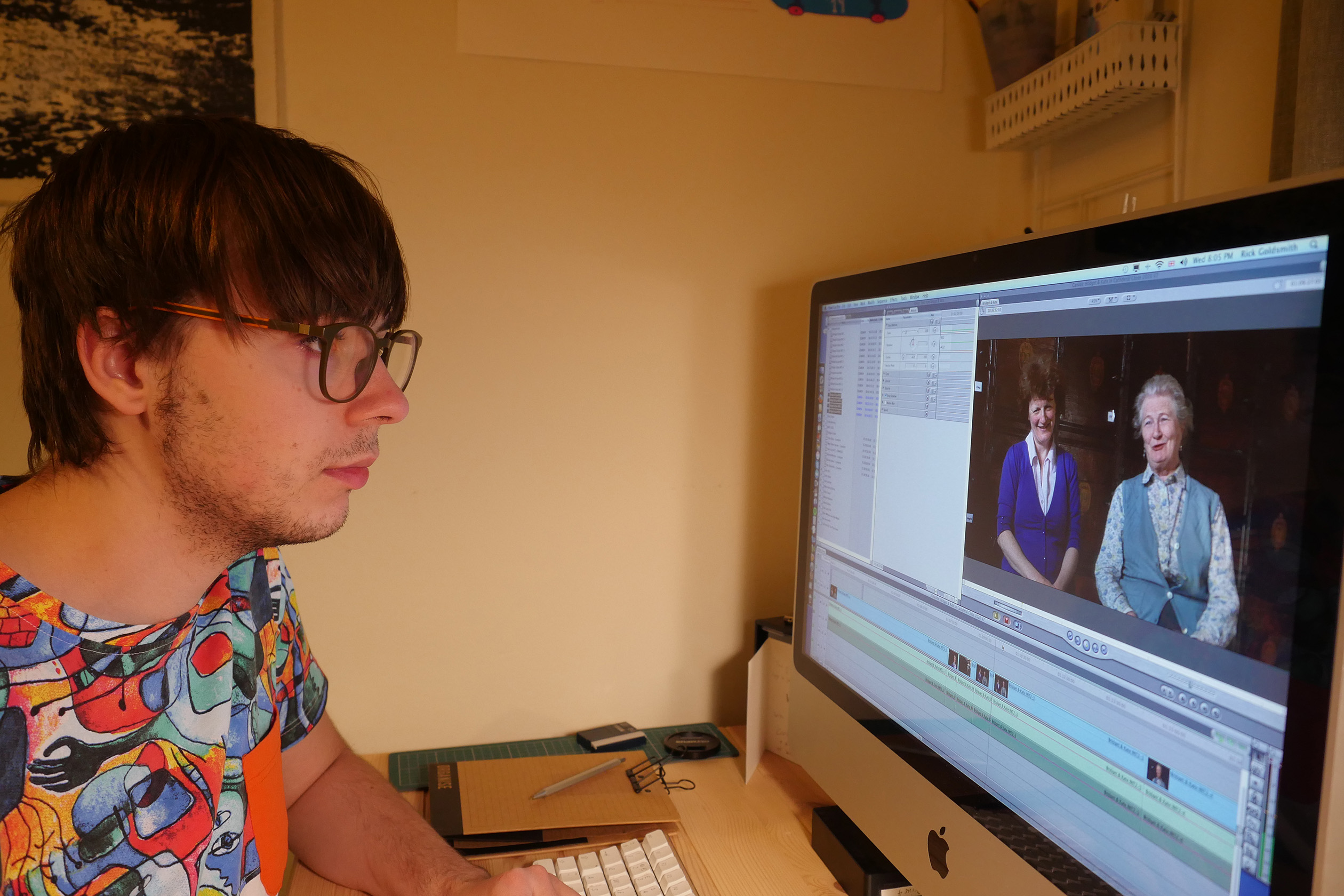
A thing you may notice if you watch many of the interviews is that some of the stories interact with each other – for example the lore of a ghost that haunts Cathedral Close that I first heard mentioned in an interview with Mary Caund. She remembered that herself and her colleagues at the Post Office’s telephonist department thought it was simply boys who’d snuck into the Cathedral to make strange noises. John… recalls a lady who dressed in a big sheepskin coat would run across the grass on Cathedral Close late at night much to the caretaker Mr. Lowe’s chagrin. Major Barnes tells a story of a lady who in her old age would get up from her bed in hospital and walk in her nightgown across the Close to her home in Gwynne street. When presented with these anecdotes it seems that rumours of a ghost on the Close may in fact be well founded!
Republishing these interviews as singular pieces will no doubt uncover not only aspects of their subjects histories but also elements of the film-making process.
The process of editing old interviews that were shot for a different purpose comes with a few different challenges – some interviews are very conversational by nature and often cover similar ground searching for the right phrasing which can demand a lot of attention to order the topics in a somewhat linear and cohesive arrangement or by simply selecting the version that has the most complete and tasty bits. On the other hand some interviews are very linear and story-like but might have been shot and framed dynamically which would typically ‘hidden’ in the final feature by cutting away to interesting supplemental footage – ‘b-roll’.
One of the small joys reserved just for me, or any serious fans, is getting to know stories and people over multiple passes, even a clip that may appear dull in a purely entertaining sense on multiple passes allows subtleties to emerge. Small pieces of information you might at first have paid no mind to, or simply missed, can present themselves as more interesting once some thought has been paid.
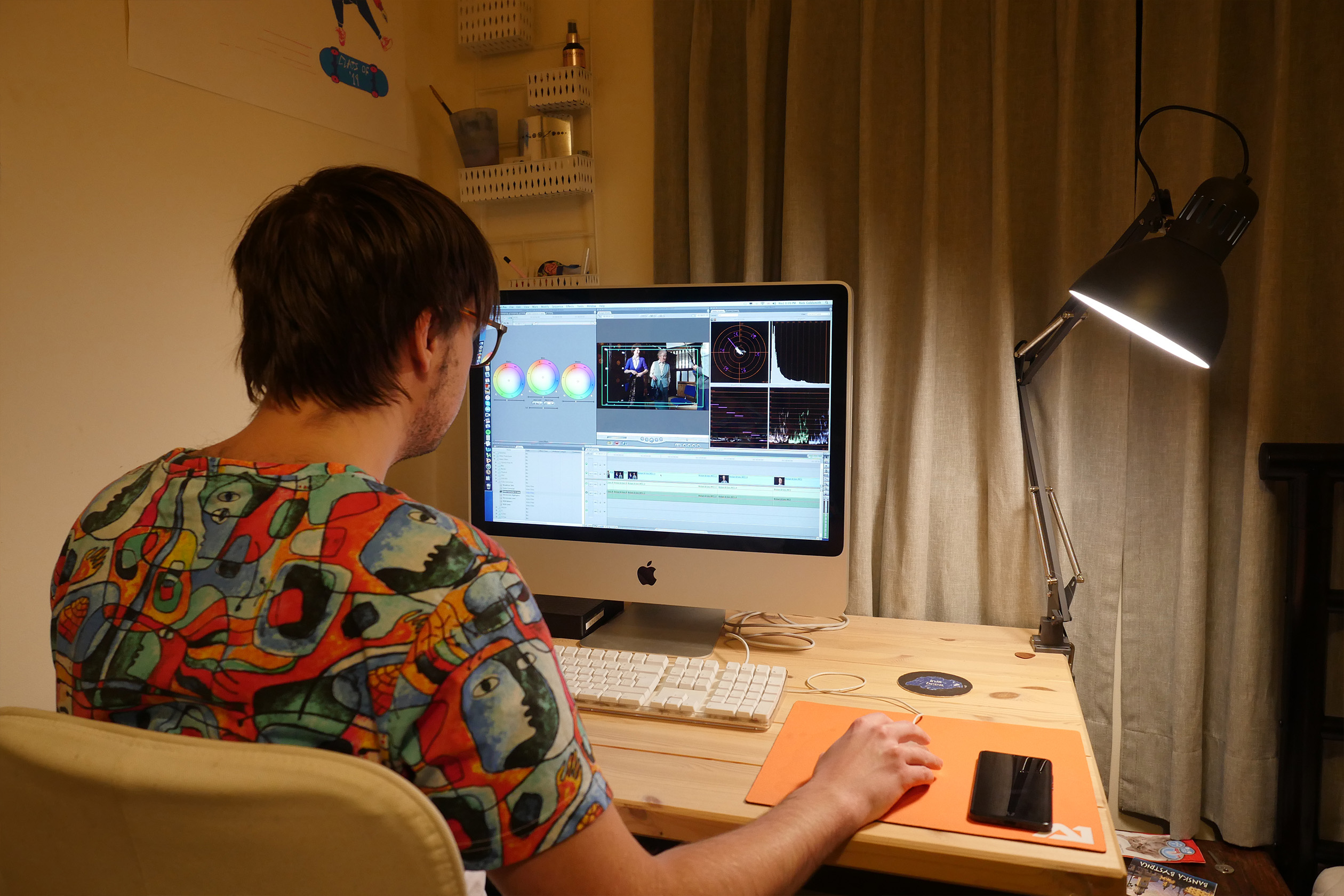
Another fascinating aspect is whenever the cost of something is mentioned I always go and check the inflation to contextualise it, a penny for a bar of liquorice in 1935 is equivalent to 25p today – though you might be hard pressed to find a similar price in a sweet shop!
If this fascinates you as well I do encourage you to look them up with The National Archives Inflation calculator
I think that one of the most interesting realisations that has resulted from working on this project for me is simply that I cherish the stories of normality – Normal changes over time, what was once mundane is truly fascinating now.
Jack Miller – Heritage and Media assistant