

A photo from the Derek Evans archive of a gathering at the Shire Hall on Remembrance Sunday in 1956. It is an impressive audience. The image is even more poignant when one thinks that the end of WWII would have been so recent for many people there. There would have been many in that crowd that day who would have experienced personal loss of one kind or another.
Nonetheless, there is no doubt Hereford has a strong military heritage in the shape of the Regiment. They are never officially acknowledged, but when you drive into Credenhill and pass the RAF base, you see the layers of armed police and military manning the entrance. It’s unlikely they would ever invite a photographer in today to take photos of their day-to-day activities. But, as we all know, those were very different times. In 1957, Derek Evans was there, taking photos of a group of SAS parachutists, their faces clear for all to see. A modern-day photographer could only hope to get within sniffing distance.

He was there again, later in the year, to record the retirement of a 40-year veteran of the army, Major Robert Cracknell, who in this image, was being drawn by boy soldiers to the gate of Bradbury lines Hereford. Major Cracknell, Derek notes on the back of the photo, went on to be a poultry farmer.
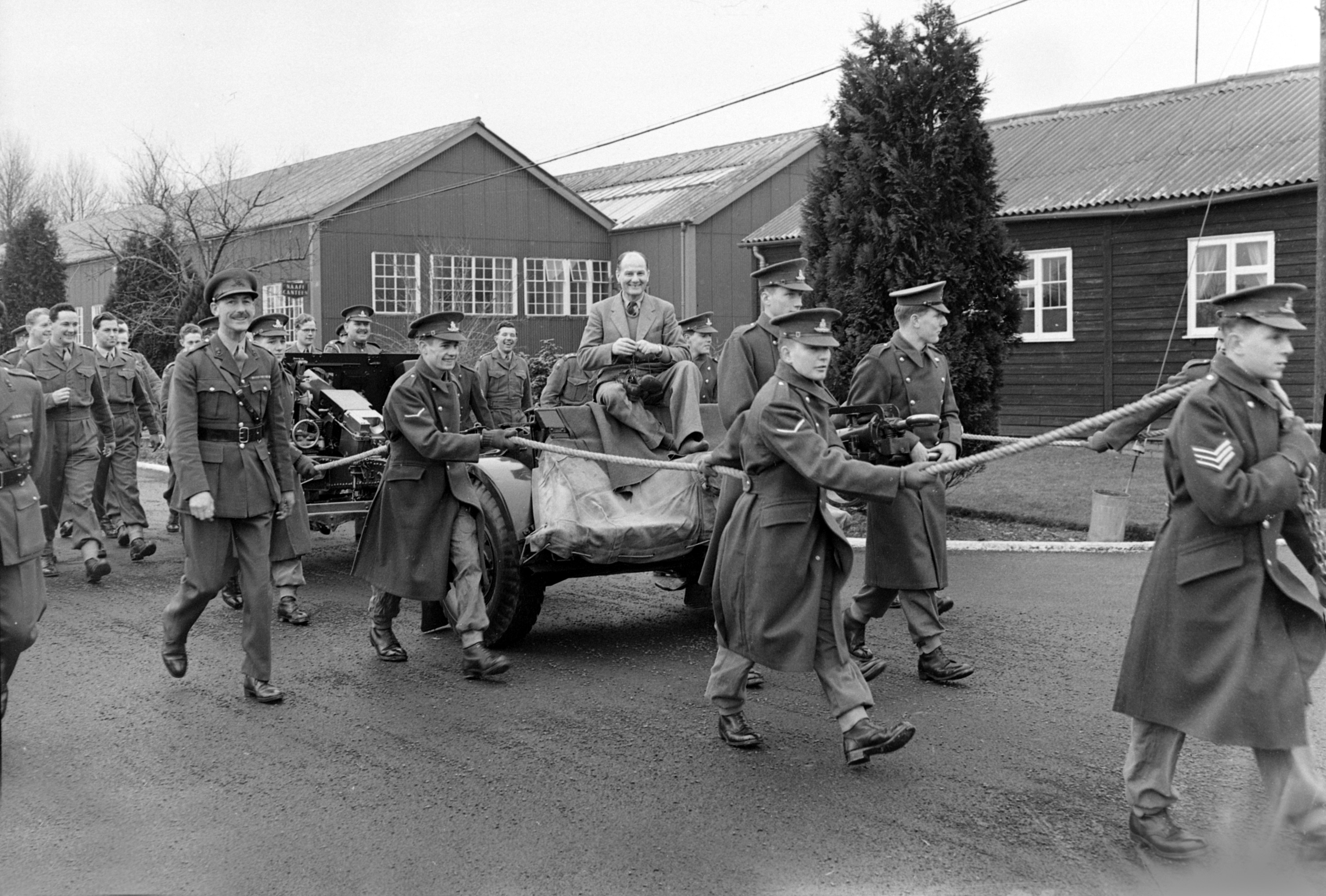
Clearly an important fact that needed to be recorded. He would have approved of the boys from the Royal Artillery Regiment, based at Bradbury Lines, in 1956. ‘Members of the boy’s regiment are heading 22 geese,’ Derek notes. ‘This procedure commenced after a pet goose, belonging to the commanding officer of the camp, was accidentally slaughtered in 1955’. Where they are going with the geese, or why is unclear. As with many of the photos in the archive, there are often more questions than answers.
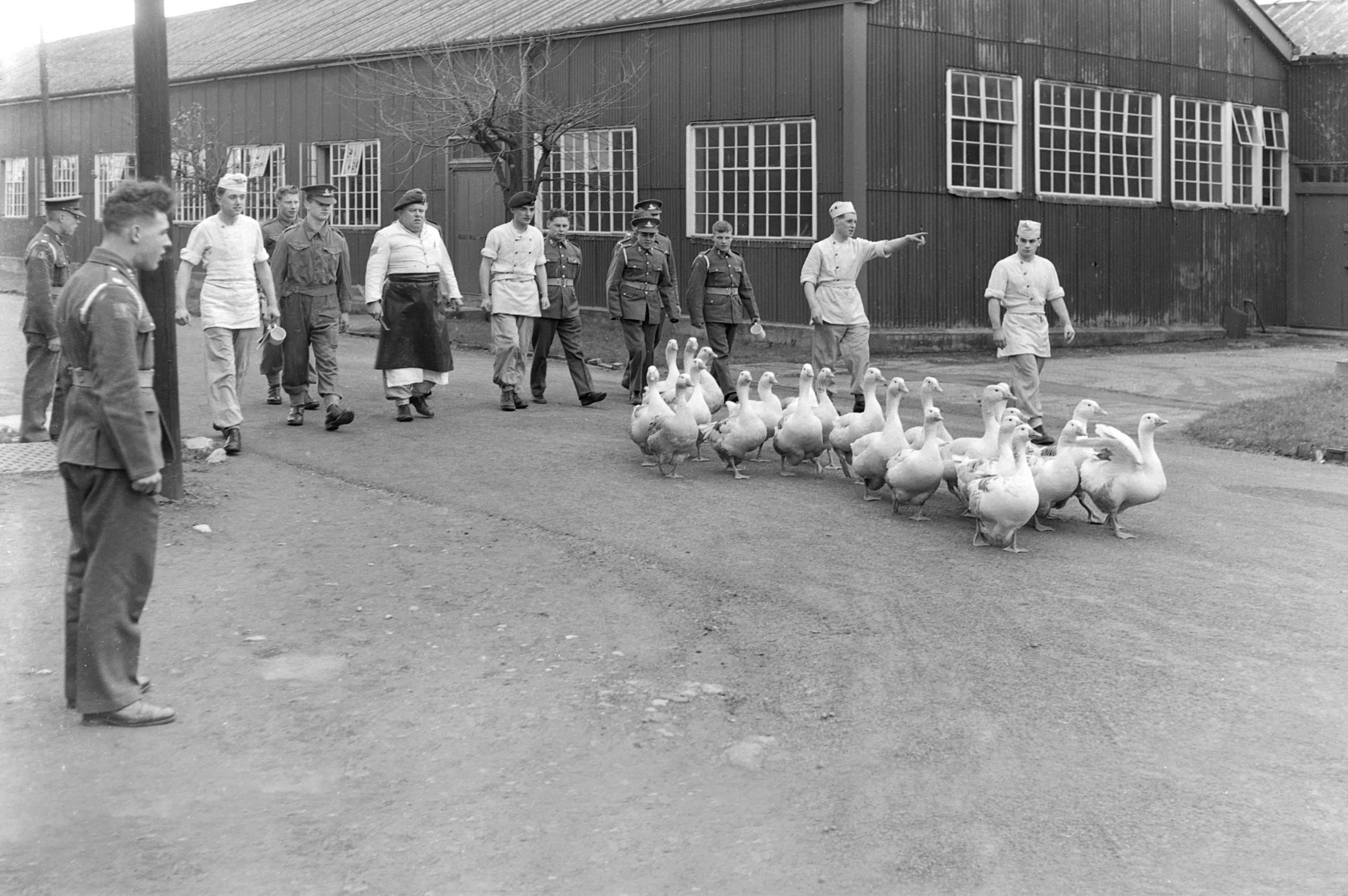
I remember seeing these geese being marched to their death in order to provide us with a good Christmas time dinner. The orderlies that looked after them were upset.